
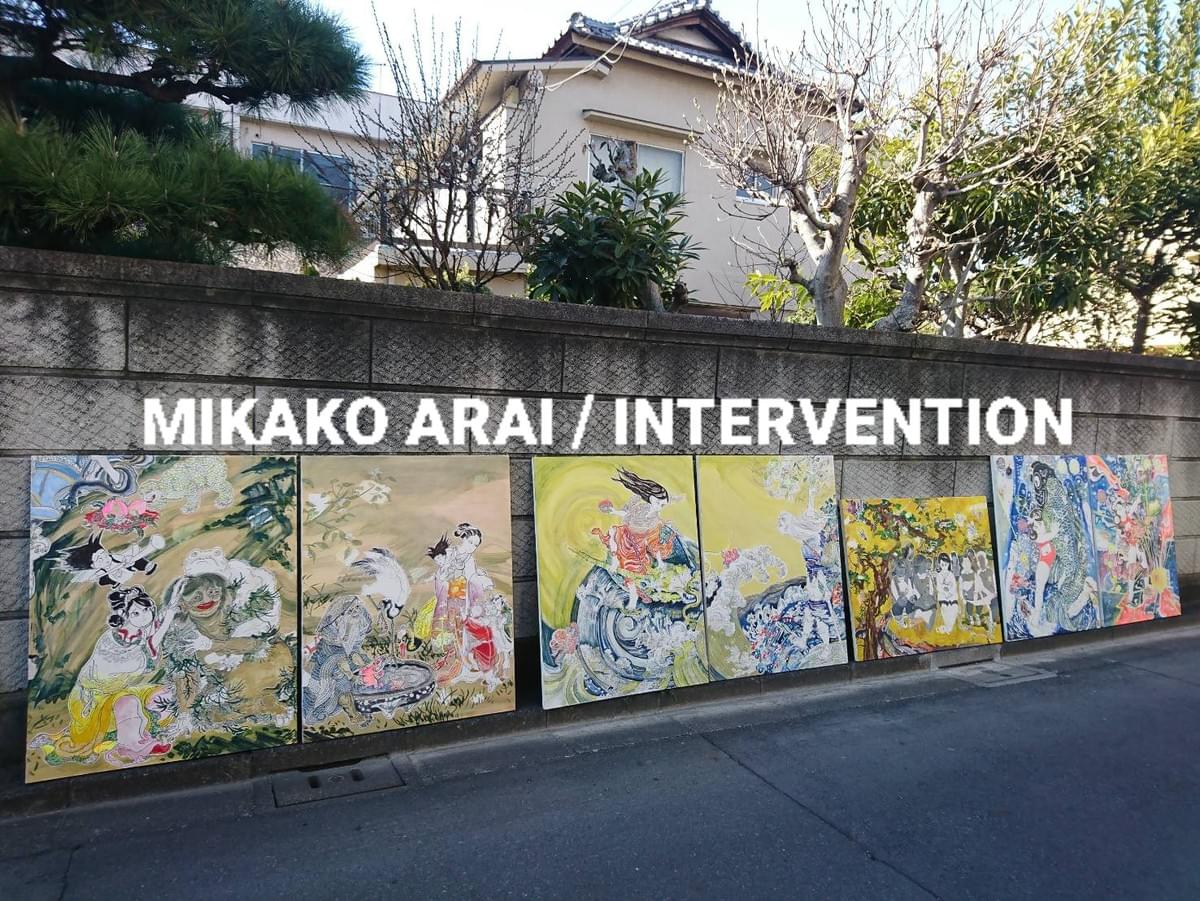
THE INTERVENTION
Placing "paintings," which are foreign objects, into everyday scenery instantly transforms a familiar view. A wall that was just a "boundary" until yesterday suddenly becomes a "gallery" the moment a painting is placed there. This "intervention" into daily life shifts people's perspectives and brings a fresh wind to the landscape of the heart.
Street installation, Tokyo.
日常の風景に「絵画」という異物を加えることで、見慣れた景色が一変する。昨日まで「境界」として存在していた壁が、絵の設置によって「ギャラリー」に様変わりする。この日常への「介入」は、人々の視点を変化させ、心の風景に新たな風を吹き込む。
Street installation, Tokyo.
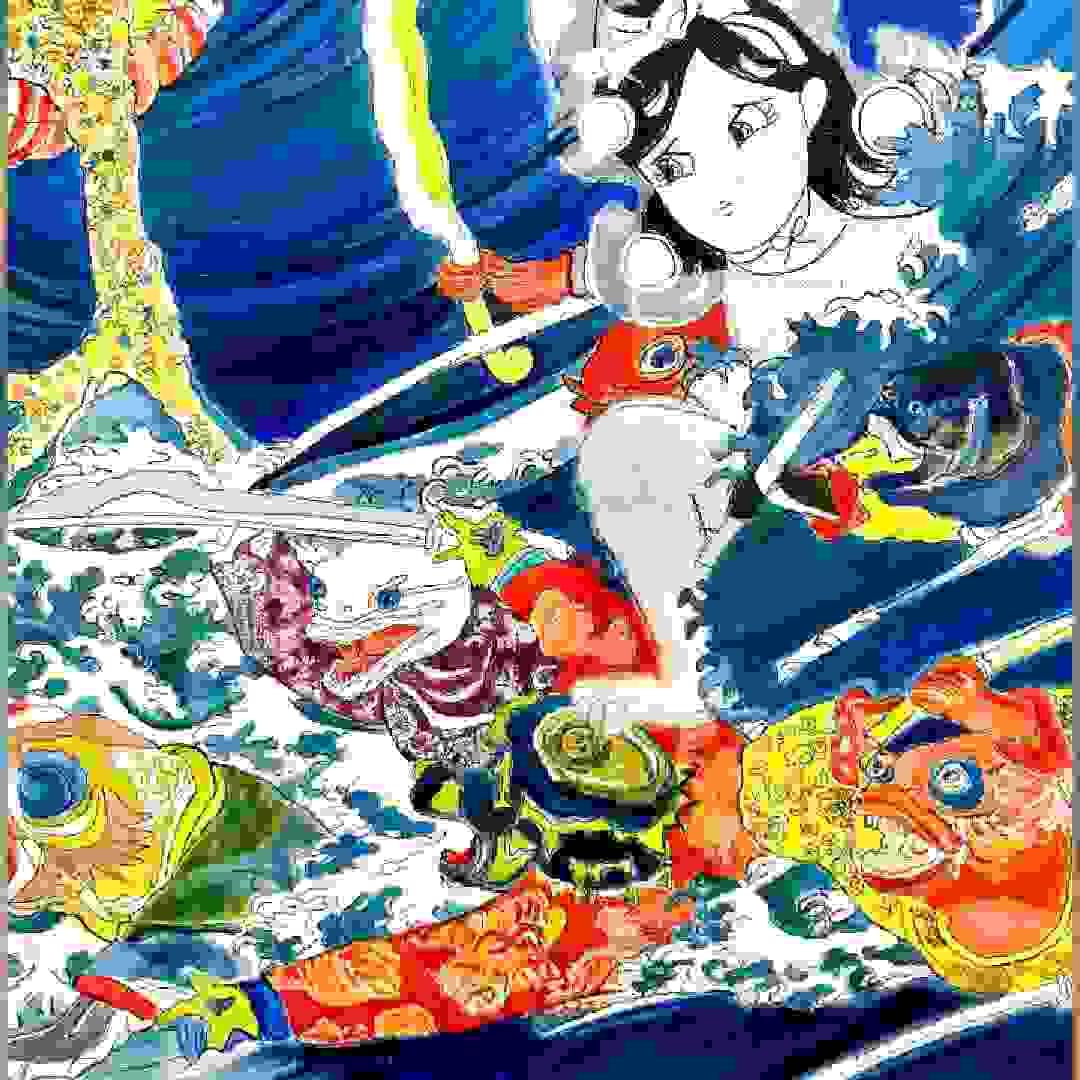
The Dragon Palace — Princess Mikamin’s "Intervention"
2026 | Oil on canvas | 227.3 x 181.8 cm (89.5 x 71.6 in) | F150
In this dynamic reimagining of the Dragon Palace—originally depicted with such vigor by Utagawa Kuniyoshi—Mikamin, the artist’s alter ego, descends as Princess Mikamin. Leading a procession of sea creatures and frolicking among them, she traverses the vast expanse of the canvas with boundless freedom.
This work transcends mere classical appropriation. By "intervening" with a contemporary, lighthearted spirit into the powerful lines drawn by a master centuries ago, Arai liberates history from the closed past, transforming it into an ongoing narrative. The grand 150-size canvas serves as a site for trans-temporal dialogue, where classical energy and modern humor resonate with unprecedented density.
Through Arai’s hand, the legend is rewritten as a new mythology for the present day.
For Arai, intervention is not an act of quotation, but a method of reactivating history—a way of allowing inherited images to move, breathe, and live again.
– Japanese –
歌川国芳が描いた躍動感あふれる龍宮の世界。その伝説の舞台に、作家の分身である「ミカミン」が姫様として降臨した。海の生き物たちを従え、あるいは彼らと戯れながら、画面の中を縦横無尽に駆け巡る。
これは単なる古典の引用ではない。数百年前の絵師が引いた強靭な線の中に、現代の軽やかな精神を「介入(Intervention)」させることで、歴史を閉ざされた過去から、現在進行形の物語へと解放する試みである。150号という広大なキャンバスは、時空を超えた対話の場となり、古典のエネルギーと現代のユーモアが共鳴し合う。国芳の「龍宮」は、今を生きる私たちのための「新しい神話」へと書き換えられた。
新井にとって「介入」とは、引用ではなく「歴史を再び動かす方法」であり、受け継がれたイメージに呼吸を与え、再び生き始めさせるための行為なのである。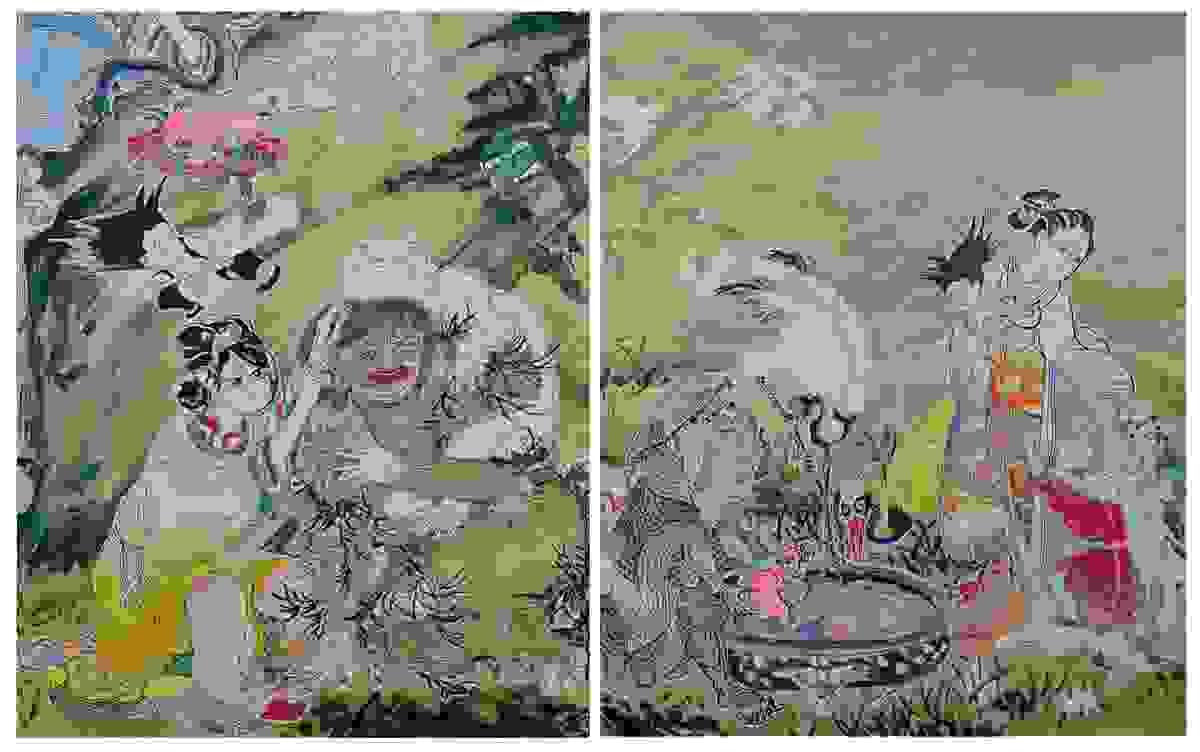
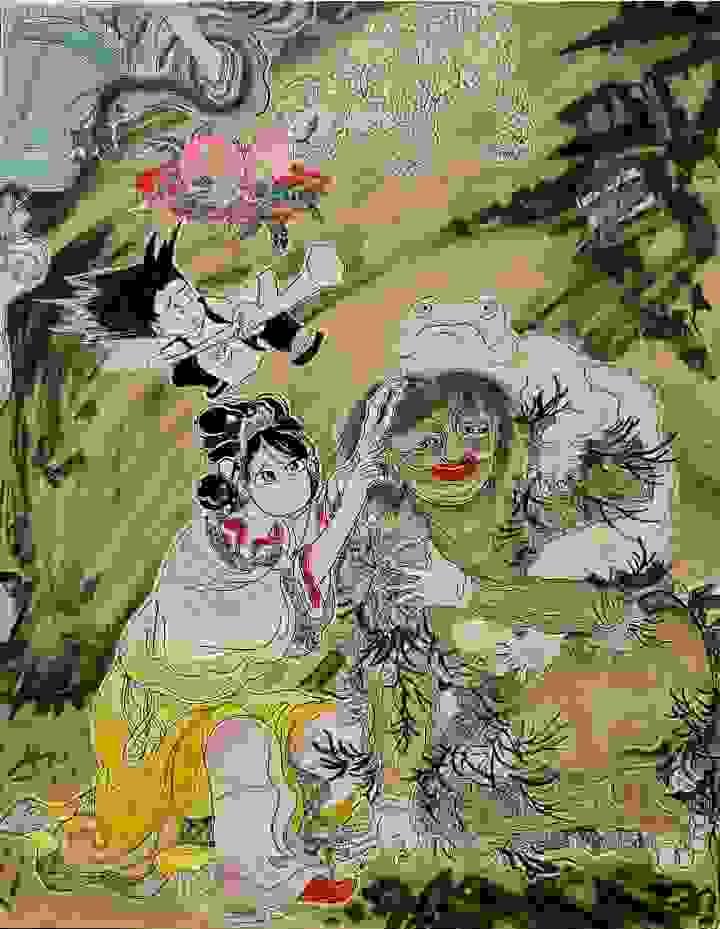
Intervention: The Toad Immortal's Happy Time
2020 | Oil on canvas | 162.1 x 130.3 cm (63.8 x 51.3 in) | F100
Collection of Kenny Schachter, New York
Arai’s work is a vibrant fusion of masterful technique and a deeply inquisitive spirit. This 100-size masterpiece is an encounter with Soga Shohaku, the 18th-century "eccentric" genius. Beyond mere homage, Arai engages with Shohaku’s raw energy through her own bold brushwork and a sophisticated sense of color that breathes new life into classical forms.
In this work, Arai focuses on the act of ear-cleaning—an intensely private gesture that Shohaku placed at the heart of his "Gama Sennin" (Toad Immortal). By introducing her alter ego, Mikamin, into this historical space, Arai transforms a mundane act into a sacred ritual of connection. It is a metaphor for clearing away the noise of the world to listen to the "voice of the other"—a dialogue across centuries between two creative souls.
This work stands as a compelling example of Arai’s ability to transform art historical motifs into sites of intimate and philosophical encounter.
— Japanese —
新井美華子の作品は、確かな技術と深い探求心が鮮やかに融合している。本作は、江戸の奇想の絵師・曾我蕭白との出会いから生まれた。単なるオマージュを超え、蕭白の持つ荒々しいエネルギーを、新井は独自の力強い筆致と洗練された色彩感覚によって現代へと引き寄せ、古典の形式に新たな命を吹き込んでいる。
新井が着目したのは、蕭白が「蝦蟇仙人(がませんにん)」の画面中央に据えた、耳掃除という極めて私的な行為である。自らの分身「ミカミン」を歴史的な空間へと登場させることで、この世俗的な所作を、数世紀の時を超えて「他者の声」を聴くための神聖な儀式へと昇華させた。耳を掻くという行為は、内なる雑音を取り除き、先人との対話に深く沈潜するためのメタファー(暗喩)に他ならない。
本作は、美術史のモチーフを、親密で哲学的な出会いの場へと転換する新井の力を端的に示す作品である。
The Toad Immortal's Happy Time (Dipytch, Left Panel)
2020 | Oil on canvas
116.7 x 91.0 cm (F50) | Set: 116.7 x 182.0 cm
45.9 x 35.8 in | Set: 45.9 x 71.7 in
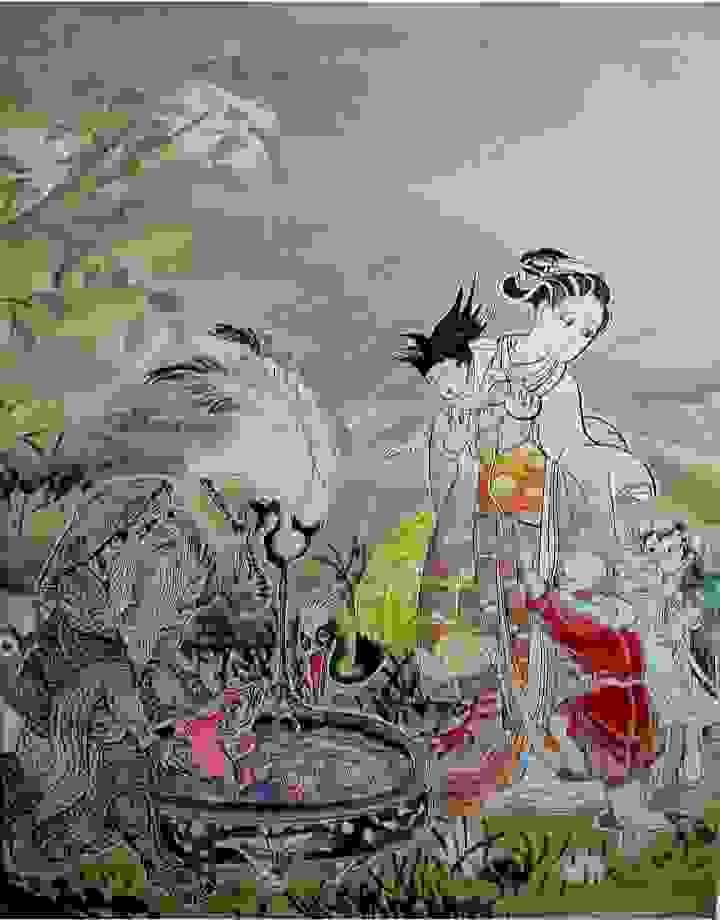
The Toad Immortal's Happy Time (Dipytch Right Panel)
2020 | Oil on canvas
116.7 x 91.0 cm (F50) | Set: 116.7 x 182.0 cm
45.9 x 35.8 in | Set: 45.9 x 71.7 in
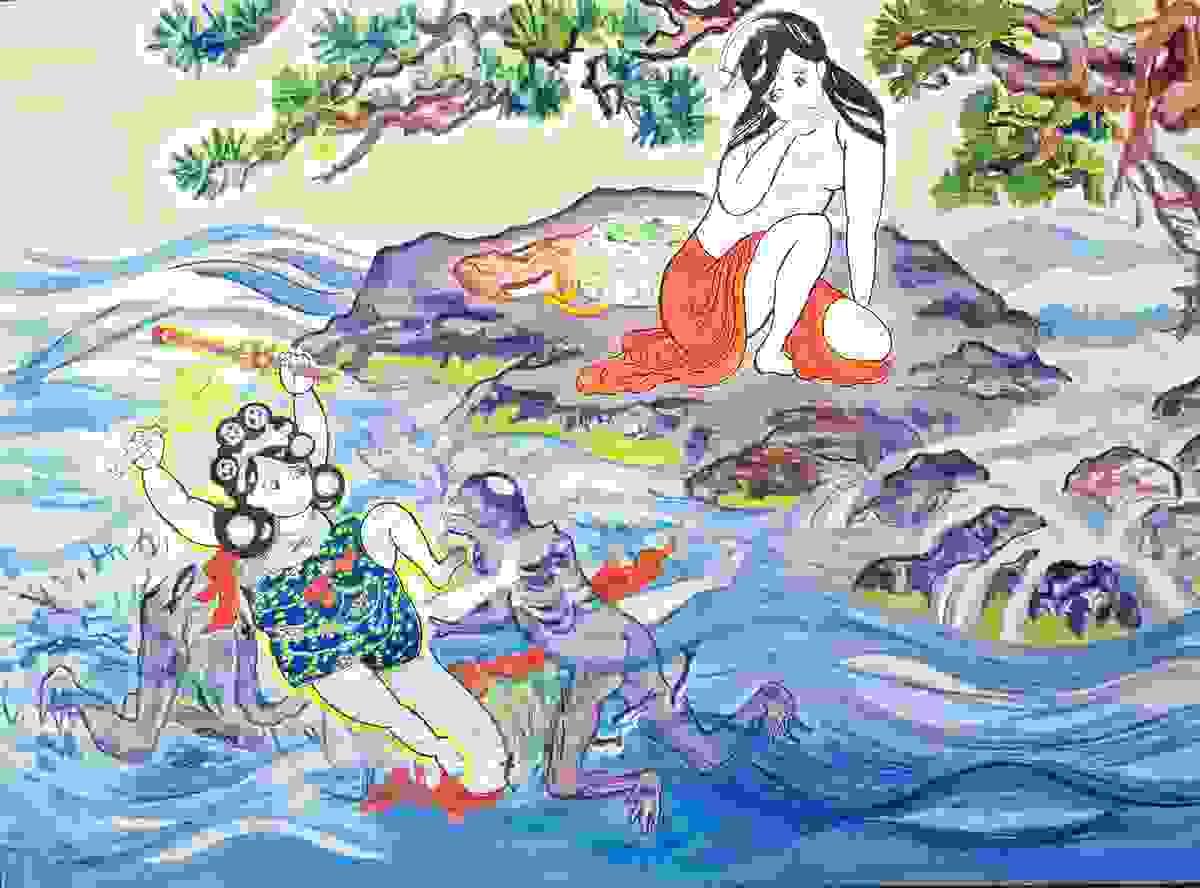
Intervention: The Kappa and the Pearl Diver — The Great Rescue
2025 | Oil on canvas | 100.0 x 72.7 cm (39.4 x 28.6 in) | P40
Provenance: Artist’s Archive
"A playful rescue that reinterprets the dynamic energy of Edo-period Shunga."
In this work, Mikako Arai intervenes in the world of Kitagawa Utamaro, a master of Ukiyo-e, specifically referencing his humorous and sensual masterpiece from the series Utamakura. The original, depicting a Kappa (a mythical water creature) and a pearl diver, is a celebrated example of 'Shunga'—art that explores human vitality with a distinct touch of Japanese wit.
Arai’s intervention adds a new layer of narrative: her alter-ego 'Mikamin' appears as a brave protector, leaping into the water to thwart the mischievous Kappa. Meanwhile, another Mikamin gazes down from above, frozen in surprise at the scene unfolding below. By strategically positioning Mikamin to mask the more explicit elements of the original, Arai transforms the primal energy of the Shunga into a contemporary story of rescue and observation. This piece stands as a sophisticated bridge between the sensual legacy of Edo and the spirited imagination of the 21st century.
For Arai, intervention is not an act of concealment, but a method of transformation—
a way of redirecting inherited images so that new narratives may emerge.
— Japanese —
「江戸春画のダイナミズムを、現代のユーモアで再解釈する。」
本作において新井美華子は、浮世絵の巨匠・喜多川歌麿が艶本『歌まくら』で描いたユーモラスかつ官能的な傑作に介入している。オリジナルは、水中で海女を襲う河童という奇想天外なモチーフを通じて、人間の生命力と日本独特の「粋(いき)」を表現したものである。
新井の介入は、そこに新たな物語を吹き込む。自らの分身「ミカミン」を勇敢な守護者として海中に送り込み、悪戯な河童を退治させているのである。その一方で、画面上部にはもう一人のミカミンが現れ、眼下の騒動に驚愕する瑞々しい表情を見せている。春画特有の官能的な部分をミカミンの存在によって巧みに覆い隠すことで、原始的なエネルギーを「救出と傍観」という現代的な物語へと転換させた。本作は、江戸の官能的な遺産と21世紀の想像力とを接続する洗練された架け橋として位置づけられる。
新井にとって「介入」とは、隠す行為ではなく「変換の方法」であり、受け継がれたイメージの方向を変えることで、新たな物語を立ち上げるための行為なのである。

Intervention: Sacred Label — Ode to Union Sauce
2021 | Oil on canvas | 116.7 x 91.0 cm
(45.9 x 35.8 in) | F50
Provenance: Artist’s Archive
"This work is a sacred homage to my lineage—the true origin of my creative spirit—and a silent prayer for the souls of my ancestors."
To understand Mikako Arai’s practice, one must look to 'Union Sauce,' the manufacturer founded by her grandfather, Tatsunosuke. During the turmoil of World War II, in a legendary act of resilience, he buried massive barrels containing his precious spices deep underground. He ordered his workers to dig a deep pit and filled the large barrels they used daily with spices before concealing them beneath the earth. After the war, the barrels were unearthed, and production resumed immediately. This pulse of 'preservation and rebirth' defines Arai’s work today.
The core of Arai’s identity lies in an inherited instinct for intervention. Her grandfather once discovered an old beer label featuring a cherub and the word 'UNION.' Recognizing a destiny in those symbols, he adopted the design as his own. Today, the physical label has vanished, surviving only as a vivid memory of a "red label with an angel."
In this piece, Arai completes a century-long cycle. She replaces the central angel—untouched for generations—with her alter-ego, 'Mikamin', and reconstructs the lost surrounding typography with her own bold vision: "The World's Best Sauce." The deliberately "unsteady" freehand lines and the meticulously layered crimson pigments are a sensory reconstruction of the factory floor. The texture evokes the tactile memory of her mother, Yone, and her uncle, Kihachiro, hand-applying labels with glue, one bottle at a time. The surrounding deep umber, reminiscent of the sauce itself, anchors the composition in a history of labor and love.
For Arai, intervention is not an act of disruption, but a method of survival—
a way of rewriting inherited images so that they may continue to live.
— Japanese —
「本作は、私の創造性の真の原点である祖先への神聖なオマージュであり、その魂に捧げる静かな祈りである。」
新井美華子の芸術を理解するには、祖父・達之助が創業した「ユニオンソース」に目を向ける必要がある。第二次世界大戦の最中、彼は職人魂の結晶であるスパイスを守るため、若い衆に深い穴を掘らせ、日常的に使用していた巨大な樽にスパイスを詰め、それを土中深くに埋め隠した。戦後すぐ、それらの樽は掘り起こされ、工場は再開された。この「保存と再生」の鼓動こそが、現在の新井の表現を規定している。
新井のアイデンティティの核心には、受け継がれた「介入(Intervention)」という本能がある。かつて祖父は、あるビールのラベルに描かれた天使と「UNION」の文字を見出し、そこに運命を感じ取り、自らのソースの象徴として採用した。現在、そのラベルは一枚も現存せず、「天使のいる赤いラベル」という鮮烈な記憶としてのみ残されている。
本作において新井は、この100年に及ぶ物語を完成させる。長年触れられることのなかった中央の天使を、自らの分身「ミカミン」へと置き換え、失われた周囲のタイポグラフィを「The World's Best Sauce」という大胆なビジョンで再構築した。あえて揺らぎを残したフリーハンドの線と、幾層にも塗り重ねられた深紅の色彩は、工場の現場を感覚的に再現する試みである。その質感は、母・米子と叔父・喜八郎が一本一本手作業でラベルを貼っていた記憶を呼び起こす触覚そのものである。周囲を取り巻くソースを思わせる濃茶色は、家族の労働と愛の歴史を力強く支えている。
新井にとって「介入」とは、破壊ではなく「生存の方法」であり、
受け継がれたイメージを書き換えることで、それらを生かし続けるための行為なのである。
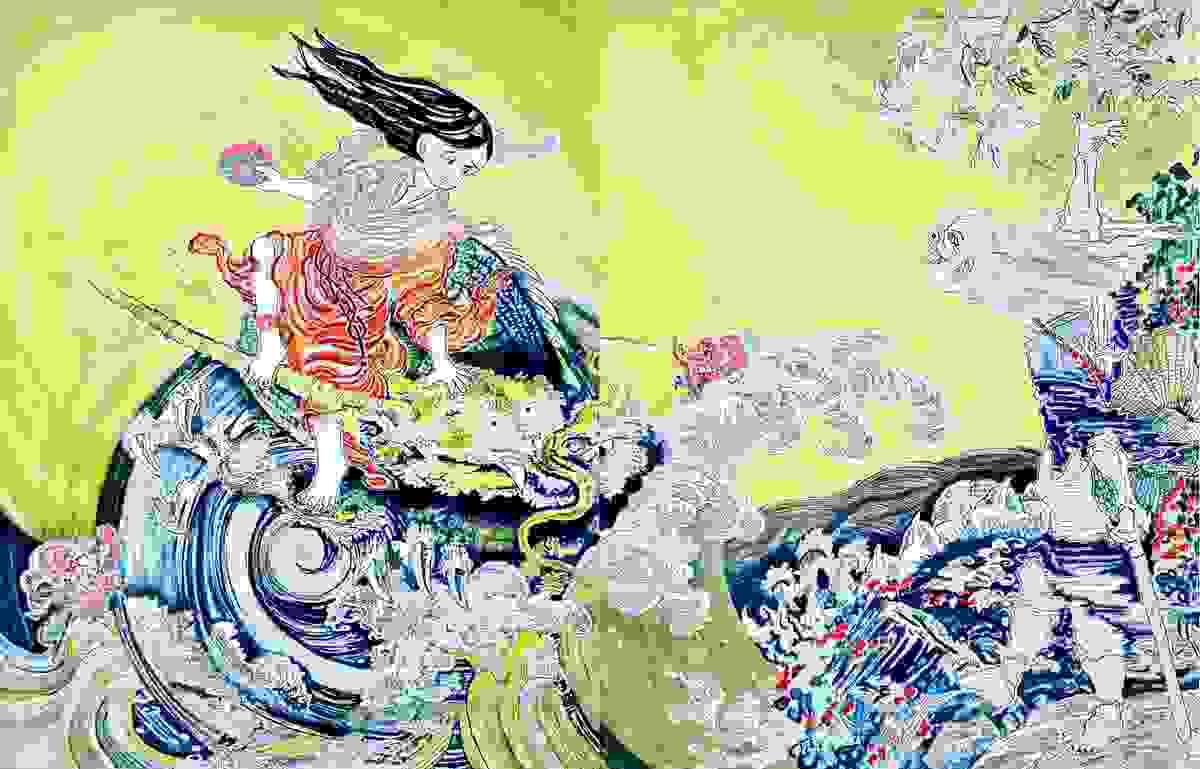
Intervention: Riding the Celestial Dragon — A Joyful Encounter
2020 | Oil on canvas | 162.1 x 130.3 cm (63.8 x 51.3 in) | F100
Courtesy of Kenny Schachter, New York
"The canvas is a space where I am liberated from all boundaries."
"This large-scale work represents an intervention into Soga Shohaku’s dynamic world. Here, Arai moves beyond historical confrontation to reach a pinnacle of pure spiritual freedom. The work depicts "Mikamin" fearlessly astride a dragon as it tears through turbulent waves toward the heavens.For Arai, who has been captivated by the symbolism of dragons since childhood, this work is deeply personal. During its creation, she experienced a profound sense of weightlessness—as if she were truly riding the dragon itself, cutting through the wind and sea spray. Every brushstroke was an act of shedding the gravity of reality.This work is presented courtesy of the artist, writer, and lecturer Kenny Schachter. It stands as a powerful record of self-liberation, dedicated to every soul that yearns for freedom across time and borders.
— Japanese —
「キャンバスは、私をあらゆる境界から解き放つ場所である。」
本作は、曾我蕭白のダイナミックな世界への介入であり、新井美華子が歴史との対峙を超え、かつてない「自由」の極致へと到達した大作である。うねる荒波を裂き、天へと昇る龍の背に、迷いなく跨る自らの分身「ミカミン」の姿が描かれている。幼少期から龍という存在に深い愛着を抱き続けてきた新井にとって、このモチーフは特別な意味を持つ。制作中、彼女の意識は現実の重力を離れ、実際に龍の背に乗って風を切り、波を蹴立てて進むような圧倒的な解放感の中にあった。筆を動かすたびに精神が解き放たれていく、その純粋な歓喜が100号という巨大な空間に結晶している。本作は、アーティスト、執筆家、そして講師であるケニー・シャクター氏の協力を得て、時代や国境を越えて自由を渇望するすべての魂に捧げる、作家の解放の記録として、ここに結実している。
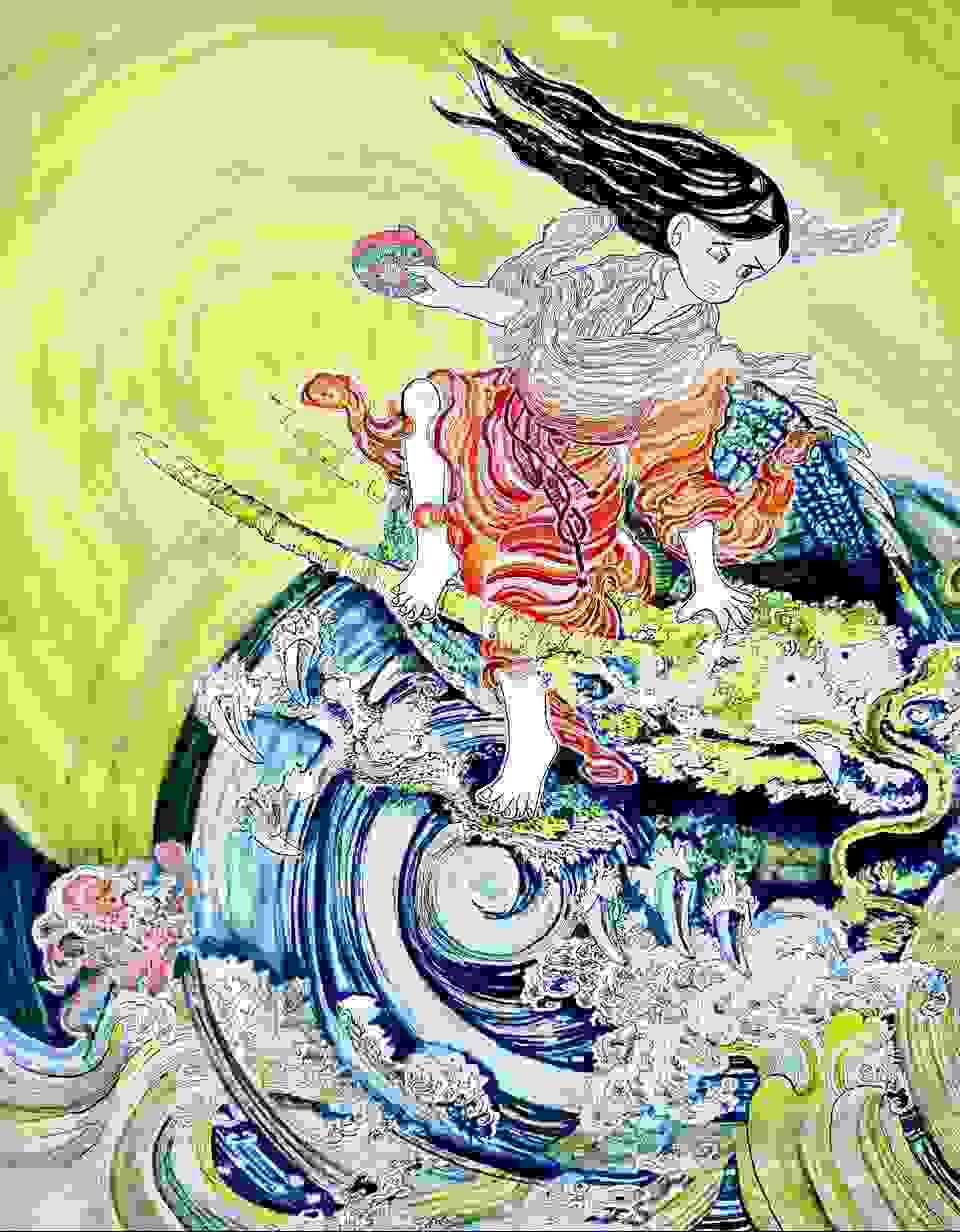
Riding the Celestial Dragon — A Joyful
Encounter(Dipytch left Panel)2020 | Oil on canvas
116.7 x 91.0 cm (F50) | Set: 116.7 x 182.0 cm
45.9 x 35.8 in | Set: 45.9 x 71.7 in
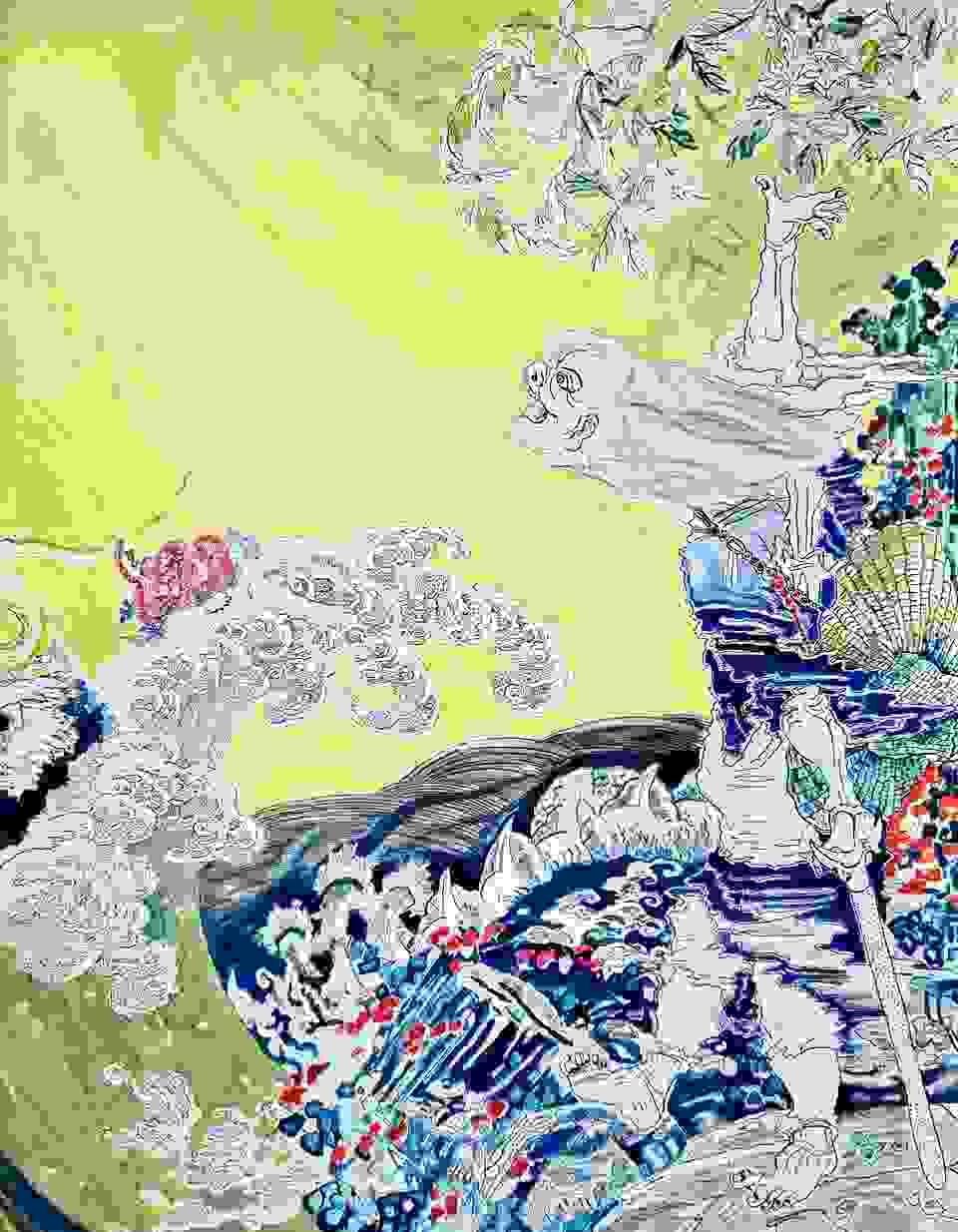
Riding the Celestial Dragon — A Joyful Encounter(Dipytch right Panel)
2020 | Oil on canvas
116.7 x 91.0 cm (F50) | Set: 116.7 x 182.0 cm
45.9 x 35.8 in | Set: 45.9 x 71.7 in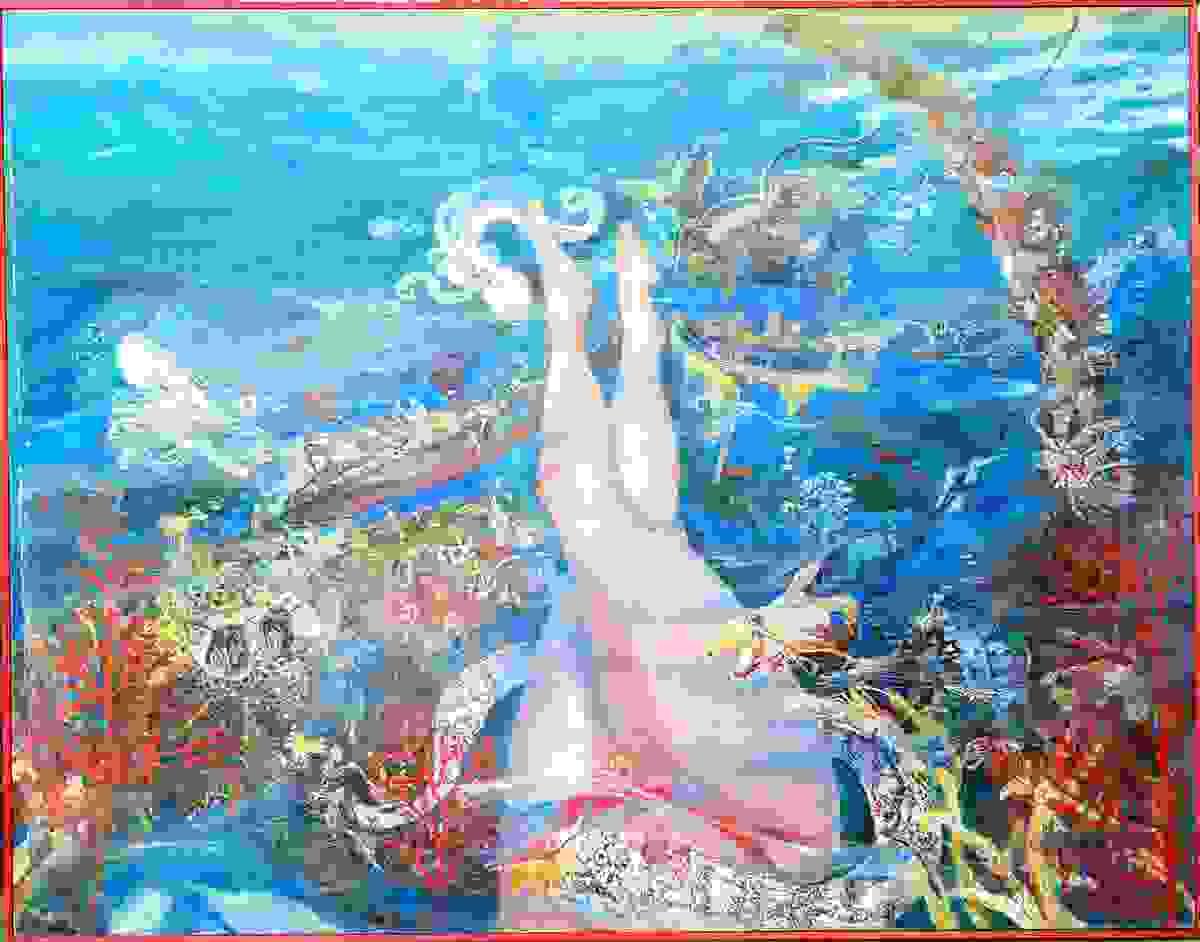
Intervention: Return to the Sea, or a Quiet Poetic Sentiment — Homage to My Master, Kotaro Migishi
2017 | Oil on canvas | 116.7 x 91.0 cm (45.9 x 35.8 in) | F50Provenance: Artist’s Archive
"If you can capture shijo — poetic sentiment — you will be invincible."This masterpiece represents a definitive milestone in Mikako Arai’s career, following her 14-year mentorship under Kotaro Migishi, a central figure in Japanese Western-style painting.
Painted in 2017, eight years after Migishi’s passing, this canvas harmonizes the inherited "soul of blue" with Arai’s own artistic independence.
While Migishi was known for his "quiet blue"—a serene tone inspired by the damp air and canal shadows of Venice—Arai has evolved this lineage into a "soft azure" that embraces the viewer with vitality and inner peace.Dominating the frame is a pair of feet, floating yet standing firm within the sea. For Arai, these "feet" serve as her first sincere step in intervening within the sanctuary of a landscape.
The layers of this blue hold memories of traveling to her master’s home in Oiso, Japan, and the blissful hours spent in a sunlit studio where Migishi studied her work with warmth.This painting is Arai’s final answer to her master’s words. It is the "beautiful silence" captured just before her feet transformed into "Mikamin," seeking even greater freedom in her intervention into art history.
— Japanese —
「これで詩情が出れば、鬼に金棒だ。」
本作は、日本の洋画界に偉大な足跡を残した三岸黄太郎氏に14年間師事した新井美華子の、油彩表現における一つの到達点である。三岸氏が亡くなって8年後の2017年に描き上げられたこの大作には、師から受け継いだ「青」の魂と、新井自身の「自立」が静かに共鳴している。
かつて師・黄太郎氏は、ヴェネツィアの運河や湿り気を帯びた空気を描き出す「静謐な青」を追求した。新井もまた、その薫陶を受け、青という色に自らの精神を投影してきた。しかし、本作における「蒼」は、師の理性的で孤独な青とは異なり、どこか柔らかく、見る者を「生」の肯定へと誘う。
海中を漂いながらも、大地をすくっと捉える一対の足。新井にとって「足」は、風景という聖域に自らを介入させるための、最も誠実な自画像である。大磯の師の自宅へキャンバスを抱えて通った日々、陽光の差し込むサンルームでの至福の対話が、この蒼い層の下には今も流れている。
師が贈ってくれた「詩情」という言葉への、これは新井なりの最終回答である。この「海中の足」は、やがてさらなる自由を求めて「ミカミン」へと姿を変える前夜の、最も純粋で、最も美しい「沈黙」の記録である。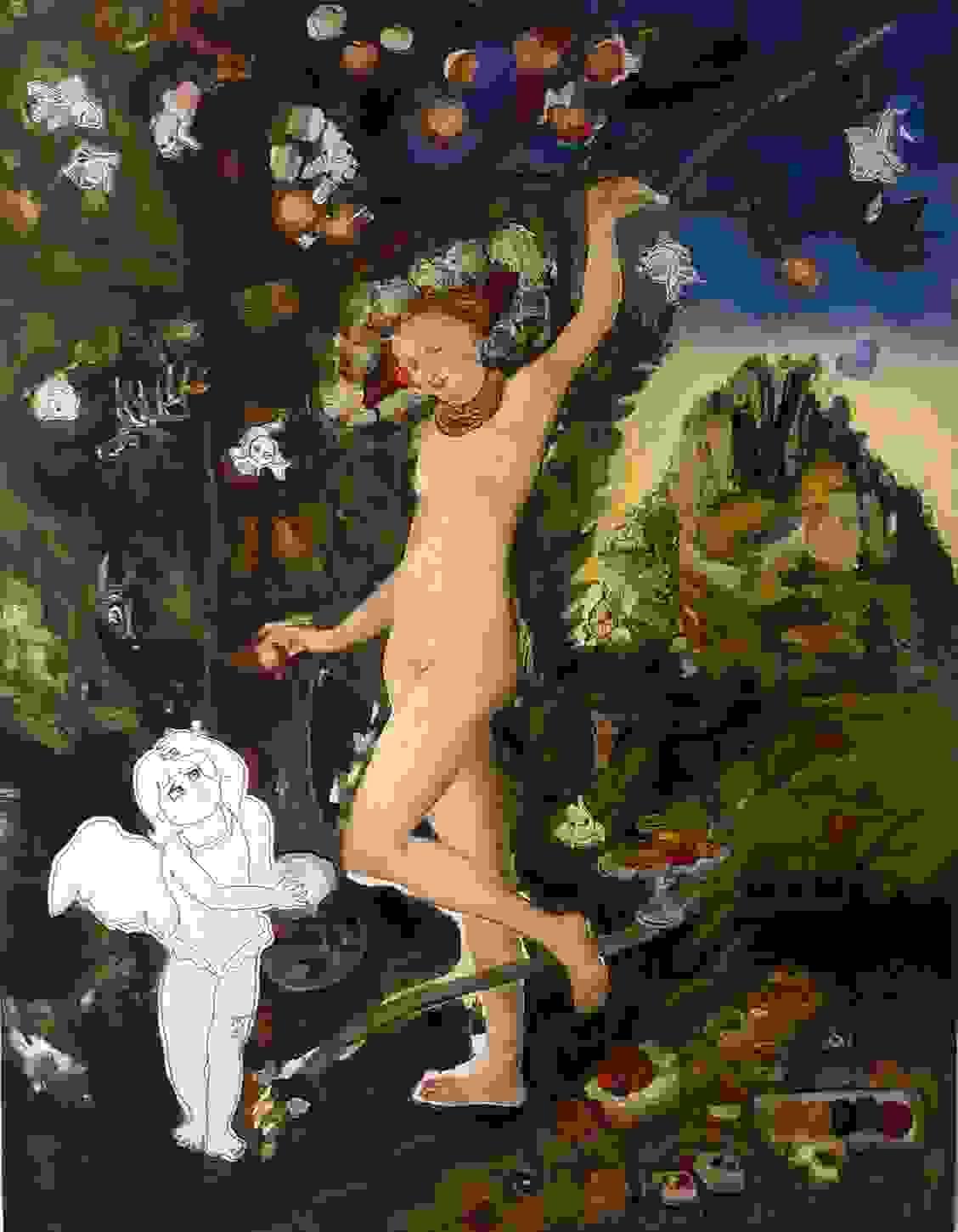
Intervention: Sweet Invader in Cranach’s Sacred Grove
2020 | Oil on canvas | 145.5 x 112.0 cm (57.3 x 44.1 in) | F80
Provenance: Artist’s Archive
"I painted this as a dialogue across time with a master I deeply admire."
In this monumental canvas, Mikako Arai orchestrates a profound "Intervention" into the enigmatic, aristocratic world of Lucas Cranach the Elder. While her previous encounters with Soga Shohaku were marked by explosive energy, her approach to Cranach is one of surgical precision and reverent silence. To embody Cranach’s signature tension—the porcelain skin and the chilling density of the forest—Arai performed a feat of technical endurance, layering oil glazes to achieve a luminosity that rivals the Northern Renaissance masters.
Into this sacred stillness, Arai’s alter ego, "Mikamin," descends as a lone, mischievous cherub. Engaging the original protagonist in a whimsical, timeless dialogue, Mikamin transforms a cold masterpiece into a vibrant scene of friendship, scattering colorful sweets like prayers across the forest floor.
This is more than a parody; it is "a rewriting of history." By merging chilling technical mastery with a contemporary pulse, Arai proves herself to be an artist who does not merely look at history, but dares to live within it and reshape it.
— Japanese —
「私はこの作品を、心から尊敬する先人との対話として描き上げた。」
本作は、ルカス・クラナッハ(父)が描く気品に満ちた世界への、80号という大画面での深い「介入」である。曾我蕭白へのダイナミックな介入とは対照的に、ここでの新井美華子のアプローチは、外科的な精密さと厳かな沈黙に貫かれている。クラナッハ特有の緊張感——陶器のような肌や、森の冷徹な密度——を具現化するため、新井は幾層にも油彩の層を重ねる技術的試練を乗り越え、北方ルネサンスの巨匠たちに比肩する画面の輝きを追求した。
この神聖な静寂の中に、新井の分身である「ミカミン」が、たった一人の天真爛漫な天使となって舞い降りる。ミカミンは名画の主人公と時空を超えた無邪気な対話を交わし、冷たい名画の世界を、カラフルなお菓子が「祈り」のように地面に散りばめられた温かな友愛の物語へと変容させる。
これは単なるパロディではなく、「歴史の書き換え」である。冷徹なまでの圧倒的な技術と現代的な鼓動を融合させることで、新井は美術史を単に眺める者ではなく、その内側に生き、歴史を更新する知的な「介入者(Interventionist)」であることを証明している。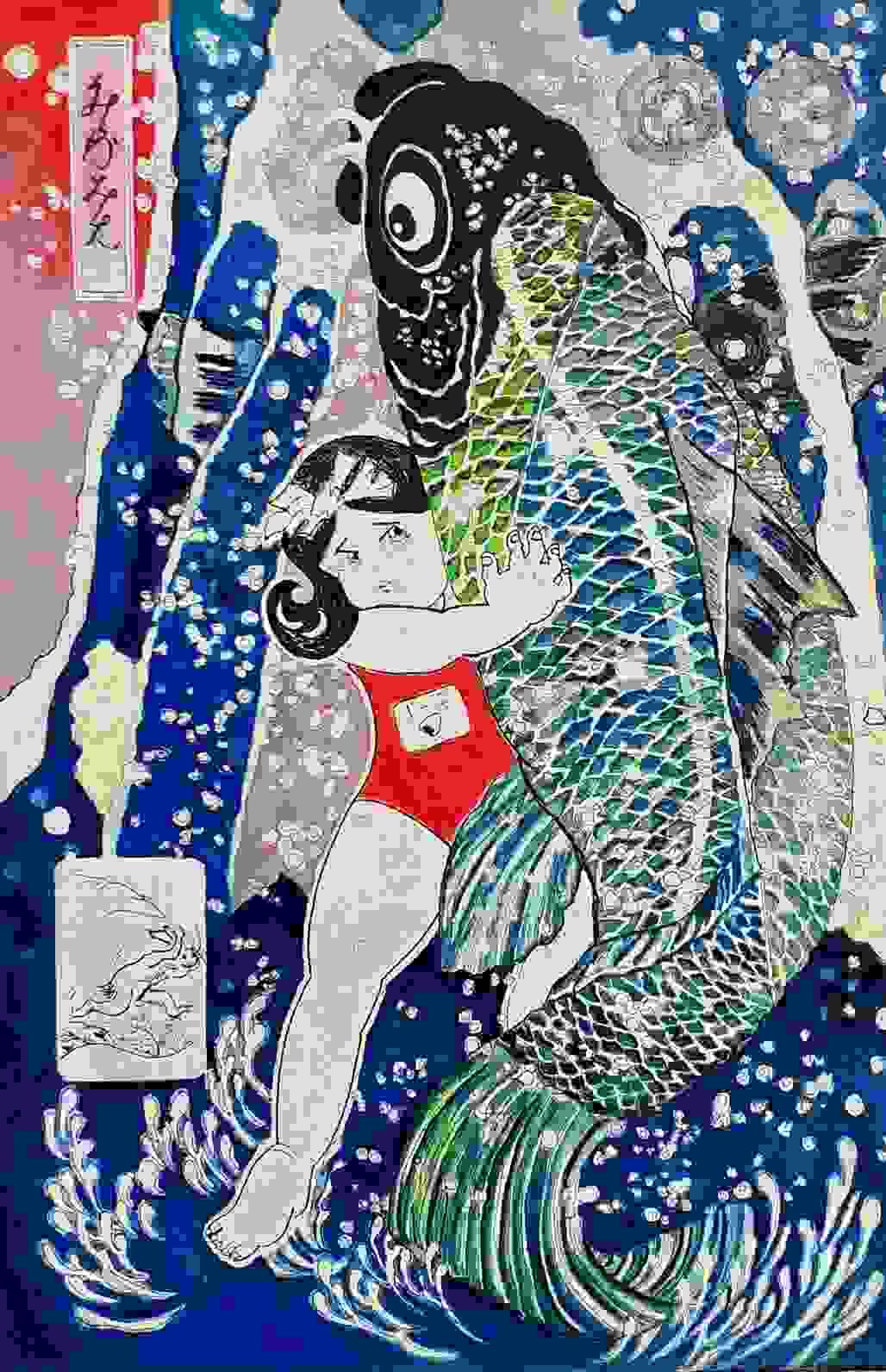
Intervention: Go For It! — The Gate of the Dragon
2020 | Oil on canvas | 72.7 x 60.6 cm (28.6 x 23.9 in) | 20P
Provenance: Artist’s Archive
"I paint with a prayer that the viewer will be filled with happiness and the energy to live life to the fullest."
In this powerful work, Mikako Arai orchestrates an "Intervention" into the world of Utagawa Kuniyoshi, the Edo-period master famous for his dynamic depictions of Kintaro and the giant carp. Arai draws inspiration from the ancient "Toryumon" (Dragon Gate) legend—a story of a carp that ascends a thunderous waterfall to transform into a magnificent dragon.
In Arai’s reimagining, her alter ego, Mikamin, takes the place of Kintaro, gripping the surging fish with fierce determination. The title "Go For It!" serves as a direct message of resilience, urging the viewer to overcome any obstacle and "become the dragon." While the composition pays homage to Kuniyoshi’s legendary bravado, the soul of the piece is fueled by Arai’s own philosophy of vitality—a refusal to be defeated by the currents of life.
The universal power of this motif was proven when a smaller version was acquired by a young collector at the University of Hawaii, moved by its raw, infectious spirit. As a cornerstone of her "Intervention" series, this 20P masterpiece stands as a testament to Arai’s mission to transform historical imagery into a modern source of inexhaustible courage.
— Japanese —
「見る人に、しあわせとエネルギーを与えられるよう祈りながら描いています。『精一杯、生きよう』というメッセージを込めて。」
本作は、幕末の巨匠・歌川国芳が描いた「金太郎と鯉」の世界への介入である。新井美華子が着想を得たのは、激流を登りきった鯉が龍へと変貌を遂げるという「登竜門」の故事である
自らの分身「ミカミン」が巨大な鯉に食らいつき、荒波を突き進む姿に、新井は「Go For It!(がんばろう、突き進め!)」という強いエールを託した。国芳譲りの躍動感あふれる構図を借りながらも、その本質にあるのは、困難に屈せず自らの力で運命を切り拓こうとする新井自身のポジティブな哲学である。
このモチーフが放つ根源的なエネルギーは国境を越え、ハワイ大学の若いコレクターがその魂に共鳴したことでも証明されている。20Pの本作は、新井の代表作の一つとして、古典的なイメージを「明日を生きるための勇気」へと書き換える「介入者(Interventionist)」としての真骨頂を示している。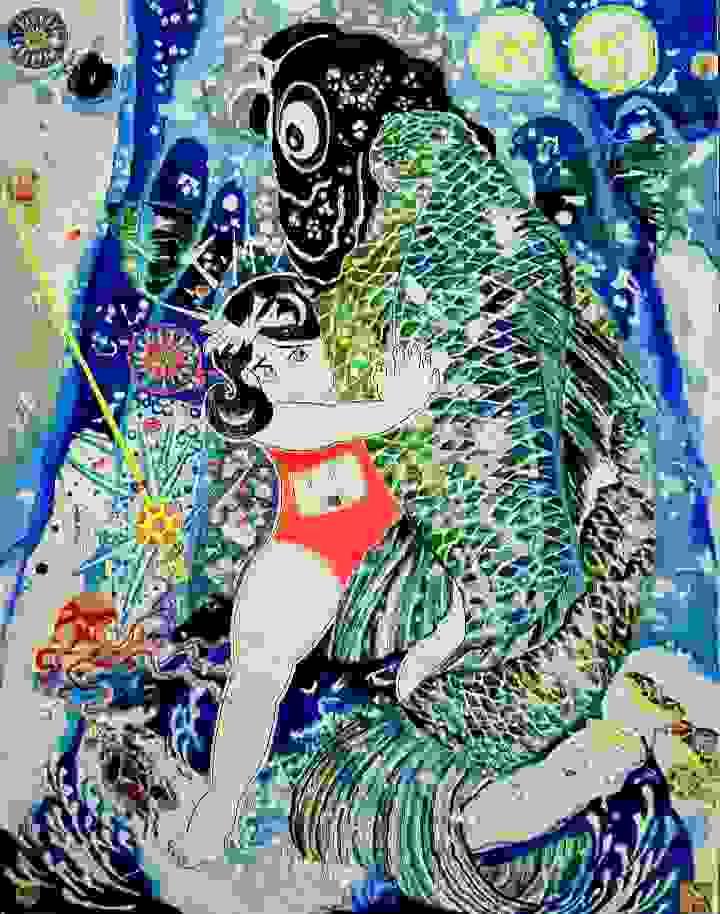
Intervention — Go For It! / Never Give Up! (2022)
116.7 x 91.0 cm (45.9 x 35.8 in) | F50
Collection of Kevin Abosch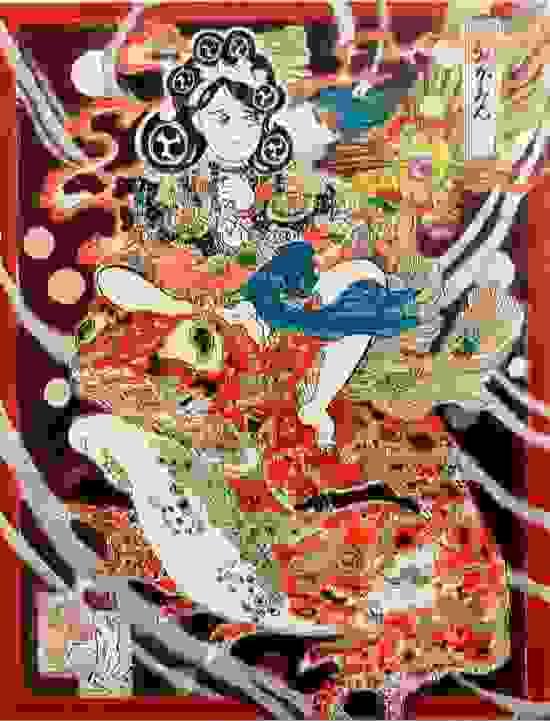
Intervention — On the Toad (2023)41.0 x 31.8 cm (16.1 x 12.5 in) | F6
Collection of Kevin Abosch"True artistic intensity maintains its dignity regardless of scale."
These two works are held in the private collection of the internationally renowned conceptual artist Kevin Abosch. Known for his sophisticated and intellectual aesthetic, Abosch acquired these contrasting pieces: a Size 50 masterpiece radiating a dynamic energy that feels as though it is rewriting history, and a smaller Size 6 work that captures a jewel-like, spiritual stillness.
The presence of these works in such a prestigious collection is inherent in Mikako Arai’s practice. The fact that an artist of Abosch’s caliber chose to acquire both scales reflects the undeniable "strength of work" and consistency that defines Arai’s "Intervention" series. It signifies that her dialogue with art history—whether through the explosive movement of a large canvas or the delicate intelligence of a small one—is recognized as an essential and dignified contribution to the contemporary art world.
— Japanese —
「芸術の本質的な強度は、スケールの大小に左右されることなく、その品格を保ちつづける。」
国際的に知られる概念芸術家、ケビン・アボッシュ氏のプライベート・コレクションに収蔵された二作品。知的で洗練された審美眼を持つアボッシュ氏が、50号の大作が放つ歴史を塗り替えるような爆発的な動感と、6号の小品が湛える静謐で神秘的な存在感という、対照的な二作を自身のコレクションに加えた。
この事実は、新井美華子の表現が一貫して備えている「芸術的品格」と、スケールを問わない「作品の強度」を証明している。大画面から溢れる躍動感も、小さな画面に宿る繊細な知性も、新井の「介入」という一貫したテーマが現代のアート・コンテクストにおいて不可欠な対話の一部として深く理解されていることを示している。
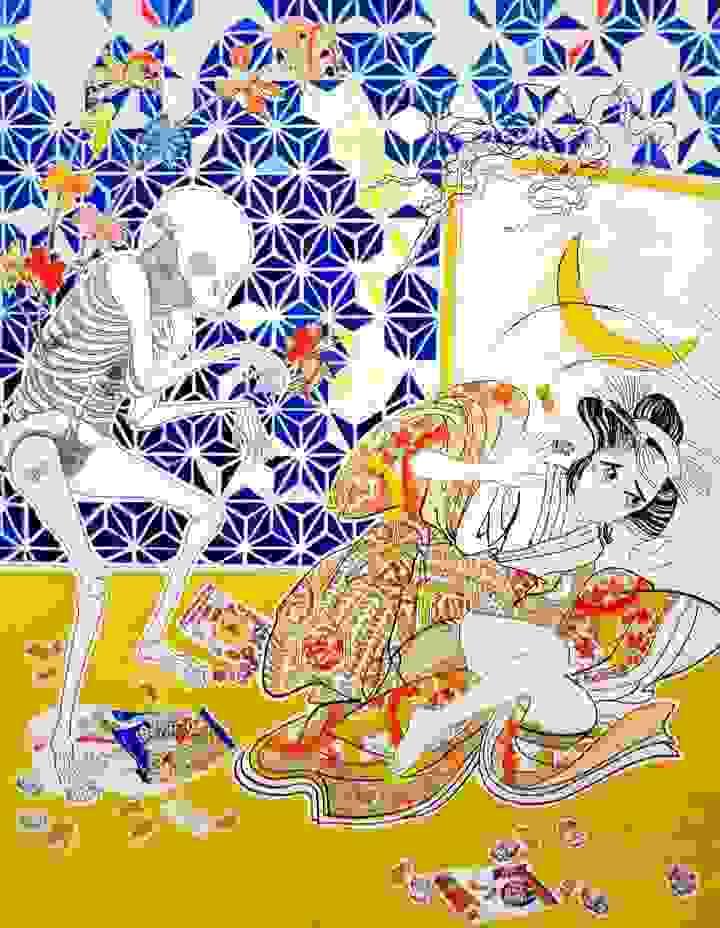
Intervention — Proposal from the Past (I LOVE YOU)
2020 | Oil on canvas | 116.7 x 91.0 cm (45.9 x 35.8 in) | F50
Provenance: Artist’s Archive
"Tradition is not a static relic, but a vibrant, living canvas where different eras can flirt and collide."
This work represents a daring "Intervention" into the spirit of Ukiyo-e. While the composition draws from the subversive energy of masters like Utagawa Kuniyoshi, the execution is uniquely Arai’s—achieved through a sophisticated, self-evolved process. To harmonize the visceral weight of traditional oil painting with the graphic flatness of manga, she eschews conventional impasto in favor of applying dozens of translucent layers. This painstaking process creates a profound "internal glow" and chromatic depth that defines the distinct textural identity of her work
The scene is a stage of temporal collision: a skeletal figure from another era offers a bouquet of cheap, plastic flowers typically seen at modern Japanese neighborhood festivals. This humorous yet eerie "proposal" with contemporary mass-produced trinkets—alongside pop icons and snack wrappers—proves that Arai's "Intervention" is a space where the past and the present engage in a daring, eternal dialogue.
— Japanese —
「伝統とは過去の遺物などではなく、異なる時代が互いに誘惑し合い、衝突し合う『生きたキャンバス』である。」
本作は、浮世絵の精神に対する大胆な「介入(Intervention)」である。歌川国芳らが持っていた反骨的な構図を取り入れつつも、技法においては独自に進化した油彩表現が用いられている。伝統的な油絵の重厚さと、マンガの持つグラフィックな平面性を調和させるため、あえて絵具を厚く盛ることを避け、数十回にも及ぶ薄い層の重なりを繰り返す。この気の遠くなるような工程が、単なる厚塗りでは到達し得ない「内側からの発光」と色彩の深みを生み出し、新井の作品に唯一無二の質感を与えている。
画面は、時空が衝突する舞台となっている。過去から現れた骸骨が手にしfているのは、現代の日本の町内会のお祭りで飾られるような、安っぽい造花の花束。ポップアイコンや菓子のパッケージと共に、現代の大量生産品を携えて求婚するそのユーモラスで不気味な姿は、伝統が単なる死んだ記録ではなく、現代の呼吸と混じり合うことで更新され続ける対話の場であることを証明している。CRITIQUE
The Aesthetics of Coexistence and the "Sanctuary of Suspension"
In the works of Mikako Arai, we witness a profound "intervention" that transcends simple parody. At first glance, her vibrant characters—the "Mikamin"—appear to play amidst the solemnity of historical masterpieces. However, a deeper gaze reveals a complex ontological dialogue.
Arai’s signature technique involves a deliberate “suspension” of the image. The unpainted spaces, the cracks in the narrative, and the areas left "unfinished" are not mere omissions; they function as a "Sanctuary of Suspension." Here, the artist resists the urge to define or dominate the historical "Other." By preserving these gaps, Arai humbles herself before history, creating a neutral ground where the past and the present can coexist without conflict.
Furthermore, the Mikamin exists on the canvas as a multi-layered entity. It is more than just a character; it is the physical manifestation of contemporary "material" asserting its presence atop the dense, traditional textures of oil. This creates a fascinating tension between the heavy gravity of the past and the light, fluid materiality of the modern spirit.
Ultimately, Arai’s work moves beyond Postmodern irony. Rather than simply deconstructing the past, she pursues a "Light Universality"—a path that allows us to find harmony and "fold" ourselves into a world of disparate elements. Her art stands as a testament to the possibility of coexistence, proving that through humor, humility, and the courage to remain "unresolved," we can awaken a profound resonance that connects us all.
— Contribution from a Fellow Artist
評論:
共生の美学と「保留の避難所」
新井美華子の作品において、我々は単なるパロディを超越した深遠な「介入」を目撃することになる。一見すると、彼女が生み出した鮮やかなキャラクター「ミカミン」が、歴史的名画の荘厳さの中で戯れているように見える。しかし、その眼差しの先にあるのは、複雑で存在論的な対話である。
新井の表現における最大の特徴は、意図的な「保留」にある。キャンバスに残された空白、物語の裂け目、あるいはあえて「描かない」ままにされた領域。これらは決して欠落ではない。それは「保留の避難所」として機能している。作者は、他者(歴史的傑作)を決めつけ、支配しようとする衝動をあえて抑え、そこに空白を残す。この隙間こそが、過去と現在が衝突することなく共存できる中立地帯となるのである。
さらに「ミカミン」は、キャンバス上で多層的な存在として鎮座している。それは単なるキャラクターではなく、伝統的な油彩の重厚なテクスチャーの上に、自らの存在を主張する二次元の「物質」そのものである。ここには、過去の重い引力と、現代の精神が持つ軽やかで流動的な「物質性」との間に、刺激的な緊張関係が生まれている。
新井の作品は、ポストモダンの皮肉を超えていく。彼女は単に過去を解体しているのではない。彼女が探求しているのは、「軽やかな普遍性」である。異質な要素に満ちたこの世界において、我がいかにして他者と折り合いをつけ、自らを「折り畳んで」共生していくか。彼女の芸術は、ユーモアと謙虚さ、そして「未解決のままにしておく」勇気を通じて、私たち全員を繋ぐ深い調和を呼び覚ますことができると証明している。
— ある芸術家による寄稿


